Boiler Maintenance & Repair in Antalya – All Brands, 24/7 Service
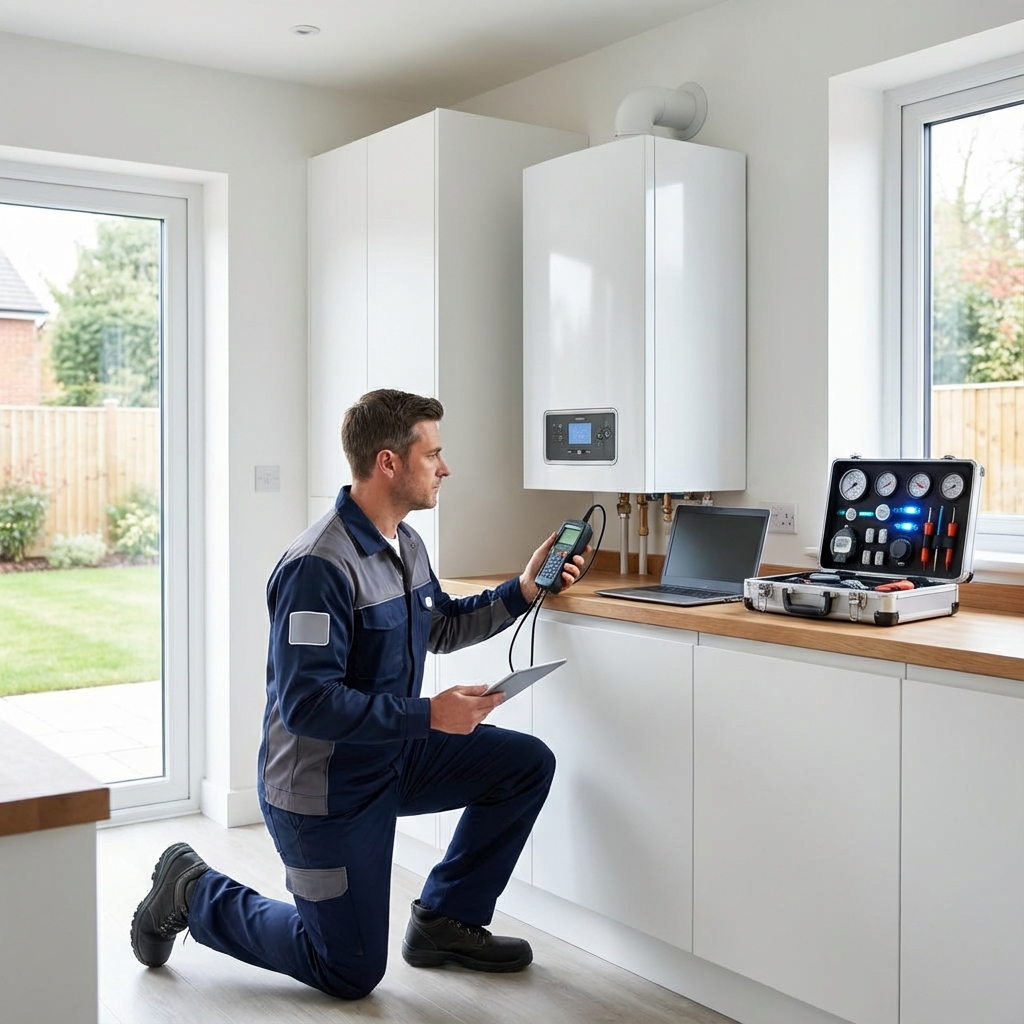
Antalya's winters are mild compared to much of Turkey, but the heating season — roughly October to April — still depends entirely on a working boiler. Whether you live in a modern apartment in Konyaaltı, an older building in Muratpaşa, or a villa in Döşemealtı, a poorly maintained boiler means higher gas bills, unexpected breakdowns, and — in the worst case — carbon monoxide risk. Tesisat Antalya provides professional annual boiler maintenance, heat exchanger cleaning, fault diagnosis and 24/7 emergency repair across all Antalya districts. We work on all major brands and our team can communicate in English. Call us: +90 532 694 74 19
Why Annual Boiler Maintenance Matters
A boiler is a mechanical appliance with surfaces that foul and components that wear — and Antalya's hard tap water accelerates both. Annual servicing addresses this before it becomes a problem:
- Energy savings: A clean heat exchanger and correctly set burner can reduce gas consumption by 15–25 %. Neglected boilers spend progressively more fuel to deliver the same heat.
- Safety: A blocked flue or faulty flame sensor creates carbon monoxide risk. Every service includes a flue draught test and CO measurement to confirm safe combustion.
- Longer lifespan: Regularly serviced boilers routinely last 15+ years; unmaintained units often need major component replacement within 8–10 years.
- Warranty compliance: Most manufacturers require annual authorised maintenance as a warranty condition. A service certificate satisfies that requirement.
- No cold-weather surprises: A boiler that fails on the first cold night of winter is the worst-case scenario. Pre-season servicing in September–October eliminates that risk.
What Our Annual Boiler Service Includes
Our standard annual service follows a 10-step protocol:
- Visual inspection: Casing, connection points and control panel checked for obvious defects or wear.
- Gas leak test: Gas supply connection and internal gas train tested with foam solution or electronic detector.
- Burner and combustion chamber cleaning: Burner surfaces and combustion chamber cleared of deposits; burner jets cleaned.
- Primary heat exchanger cleaning: Scale and soot removed from the main heat transfer surface, chemically or mechanically.
- Secondary (plate) heat exchanger cleaning: Lime scale removed from the domestic hot water exchanger — the most common cause of poor hot water performance in Antalya.
- Filters: Inlet and outlet strainers cleaned; damaged filters replaced.
- Expansion vessel pressure check: Pre-charge pressure measured; nitrogen top-up carried out if required.
- Flue draught and emissions test: Flue gas draw measured; CO₂ and CO values recorded. Burner adjusted if readings are outside acceptable range.
- Safety component test: Flame sensor (ionisation electrode), pressure switch, NTC sensors and pressure relief valve tested for correct operation.
- Test run and certification: Boiler run in both heating and hot water modes; outlet temperature, system pressure and combustion parameters logged. Written service certificate issued.
Common Boiler Faults and How We Fix Them
Boiler Not Working
We begin by checking the basics: mains power, gas valve, system water pressure (should be 1–1.5 bar) and fuses. If these are all normal, the fault is likely in the control board, flame sensor or pressure switch. Electronic board failures, manifold pressure switch faults and pump capacitor failures all present the same way — we diagnose before replacing.
No Hot Water
In Antalya's hard-water areas, scaling of the secondary (plate) heat exchanger is by far the most common cause. Chemical descaling or replacement is applied depending on the severity of the blockage. A faulty flow sensor (water flow switch) or domestic hot water NTC sensor can produce identical symptoms and is checked at the same time.
Boiler Keeps Losing Pressure
If your pressure gauge is falling and you keep needing to top up, there is a water leak somewhere in the system. Common locations: radiator valves, panel gaskets, expansion vessel membrane failure, or a weeping internal component inside the boiler. We pressurise the system and trace the source of the loss.
Boiler Making Noise
Kettling — a rumbling or banging sound — is usually caused by scale on the primary heat exchanger. Air in the system produces a gurgling or knocking sound from the radiators; this is resolved by bleeding the system. Circulator pump bearing wear also causes noise and is checked during service.
Ignition Failure — Error Code Showing
Each brand has its own fault code system. Codes such as E01, E10 or F28 typically indicate ignition failure. Possible causes include a faulty ignition electrode, a dirty flame sensor or a gas valve problem. Reading the exact code narrows the diagnosis immediately.
Boiler Ignites Then Locks Out
If the boiler fires briefly and then shuts off, the flame sensor (ionisation electrode) is most often to blame: if it cannot detect the flame, the boiler triggers a safety lockout. Cleaning or replacing the electrode usually resolves this. Insufficient gas supply pressure can produce the same fault.
Condensing Boiler Maintenance
Condensing boilers have additional components — a condensate drain line and a condensate neutraliser — that standard boilers lack. Annual service includes checking the drain line for blockages (a common fault in cold weather) and replacing the neutraliser granules. The secondary condensing surface also needs to be descaled. A condensing boiler operating below 109 % efficiency is a sign of heat exchanger fouling.
Antalya Hard Water and Your Boiler
Antalya's tap water is classified as hard to very hard, with calcium carbonate levels typically between 200 and 400 mg/L depending on the district. This accelerates limescale build-up on heat exchangers and in the domestic hot water circuit. In practice, this means:
- Secondary heat exchanger descaling should be carried out every 1–2 years, not just when symptoms appear.
- New boilers in buildings fed from private wells (common in Döşemealtı) may see scale forming even faster — well water is often significantly harder than municipal supply.
- Installing a scale inhibitor on the cold water inlet significantly slows the build-up and is worth discussing at the time of service.
Boiler Brands We Service
We carry out maintenance and repairs on all major brands including Vaillant, Baymak, Bosch, Arçelik, Demirdöküm, Ferroli, Protherm, Viessmann, Junkers, Buderus and others. We stock commonly needed spare parts — flame sensors, ignition electrodes, NTC sensors, expansion vessels and pump capacitors — in our service vehicles so that the most frequent faults can be resolved in a single visit.
Service Areas
Frequently Asked Questions
- When is the best time to book a boiler service? September to November is ideal — before the heating season begins. If you've just moved in or the boiler has never been serviced, any time is better than waiting.
- How long does a service take? A full annual service takes 60–90 minutes for a standard combi boiler.
- My boiler pressure keeps dropping — can I top it up myself? Yes, you can refill via the filling loop, but if pressure drops repeatedly there is a leak. Contact us for a leak investigation.
- Is my 10-year-old boiler worth repairing? Minor parts (flame sensor, capacitor) are always worth repairing. If the heat exchanger or control board needs replacement and the cost exceeds 50–70 % of a new unit, replacement is usually more economical.
- Do you service all boiler brands? Yes — Vaillant, Baymak, Bosch, Arçelik, Ferroli, Protherm, Viessmann, Demirdöküm, Junkers, Buderus and others.
- Can you communicate in English? Yes. Our team includes English-speaking staff and we are accustomed to working with foreign residents and holiday-home owners across Antalya.
- How quickly can you come? For central districts (Konyaaltı, Muratpaşa) we typically arrive within 20–35 minutes. Kepez and Döşemealtı may be 30–50 minutes depending on traffic.

